
Author – Harshith Viswanath
Imagine a day in the life of an Indian. From the cup of tea or coffee that starts the morning to the snacks, toothpaste and soaps that are consumed by millions of Indians. Fast Moving Consumer Goods (FMCG) touch the life of every Indians.
The Indian FMCG market is expected to reach over $220 billion by 2025 and enjoys distribution from kirana stores, supermarkets, e-commerce channels and delivery apps (Zepto and Blinkit). The FMCG sector is growing due to deep digital penetration and changing rural consumption patterns.
Core Growth Drivers of the FMCG Sector
- Premiumization: A strategy that refers to offering high-quality products at exclusive prices. Instead of a lays packet for Rs 20 a consumer seeking luxury and indulgence would buy protein chips costing Rs 70-80.
- Rising Disposable Incomes: Disposable Income has increased from $2,110 to $2,770 and is projected to increase to $4,390 by 2029. The growth in disposable incomes increases consumer expenditure by boosting purchasing power.
- Middle-Class Explosion: By 2030, India is expected to have 130 million households with incomes of $15,000+. This would constitute 40% of Indian households falling under the high-income category.
- Gen-Z Consumption Wave: Gen Z, born in the era of mobile-phones and internet will constitute 36% of the working population by 2030. This generation is generating demand for purpose-driven brands and digital consumption.
- Mobile-first user base: India has more than 900 million mobile-users and widespread 4G/5G penetration is driving demand in urban and rural markets through e-commerce channels.
- Rural Consumption: Rural markets continue to outperform urban markets. In Q1 2025, rural consumption grew at a pace four times that of urban consumption.
The Multi-Bagger Bets
1) Radico Khaitan – Toasting India’s luxury spirits (Source: Money Control)
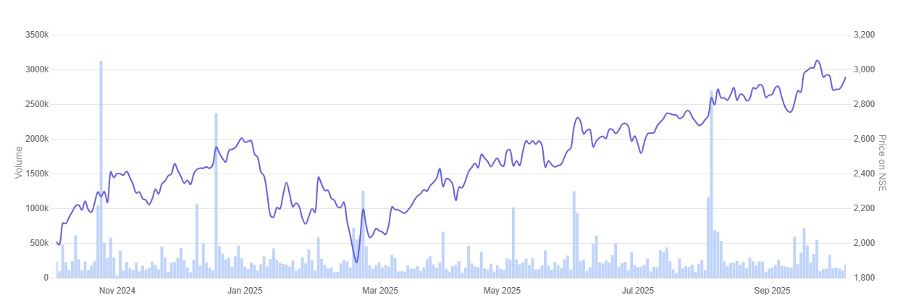
Radico Khaitan is emerging as one of the established players in the alcoholic beverages space.
- Robust Revenue Growth: Magic Moments Vodka has crossed 7 million cases in 2025 and is expected to reach 12 million cases by 2028.
- Product Portfolio Expansion: The company has announced the launch of 2 products under Rampur Jugalbandi series and Magic Moments “Jamun Spicymint”. The Jamun Spicy Mint variant is expanding into markets such as Goa, Assam, Maharashtra and Rajasthan.
- Consistent Returns: The stock has shown significant resilience generating returns of 620.52% over the past years while Sensex has generated 111.64%.
- Premiumization: Radico Khaitan is capturing the market by providing high-quality spirits for consumers seeking luxury and indulgence.
2) Dodla Diary – Freshness of the farm, delivered home (Source: Trading View)
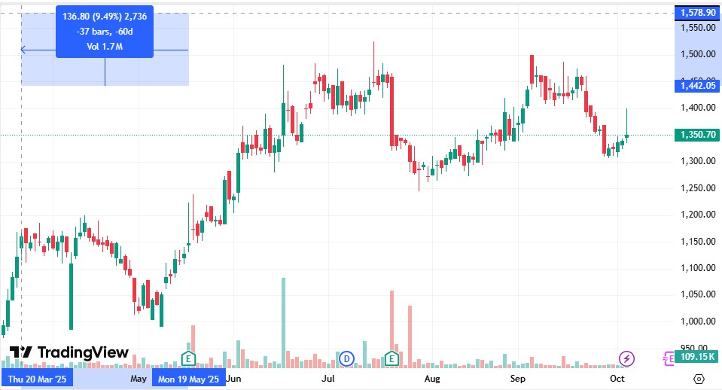
Dodla Dairy is positioning itself as one of the dominant players in the dairy industry.
- Consistent Sales Growth: The revenue grew by 39% between FY22 – FY24 driven by an increase in average milk sales by 17%, from 9.3 lakh liters per day (LLPD) in FY22 to 10.9 LLPD in FY24 whereas the curd sales grew by 30%, from 269.8 LLPD in FY22 to 349.9 LLPD.
- Diversified Product Portfolio: The company sells a range of milk products like butter milk, ghee, curd, ice creams, paneer, dhoodh peda and has a separate product portfolio for Africa.
- Dominant Presence in the South and Africa: The milk and dairy value-added products are distributed through Dodla Dairy parlors such as Andhra Pradesh (AP), Tamil Nadu (TN), Karnataka and Telangana. They have 284 distributors and 2 plants across Uganda and Kenya.
- Expanding footprint in eastern markets: Dodla Dairy acquired a 100% stake in
Jharkhand-based Osam Dairy for Rs 271 crores expanding its footprint in Bihar, Jharkhand, West Bengal and Bihar. Osam Dairy has a strong network of close to 25,000 farmers and recorded a revenue of Rs 283 crores in 2024-2025.
Disclaimer: This article is for informational purposes only and not investment advice. Please consult a financial advisor before investing.